THIRD QUARTER 2026
New European initiative to preserve cultural heritage through new virtual technologies
European Union initiatives in the field of virtual worlds and Web 4.0 have identified a critical obstacle. Cutting-edge technologies such as Extended Reality (XR), digital twins and generative Artificial Intelligence (AI) have each reached a remarkable level of maturity. Despite this, their joint deployment in reliable, interoperable, and human-centred virtual environments remains a challenge for Europe.
At present, immersive experiences rely on static or isolated data with very limited control over its provenance. Added to this is the fact that generative AI lacks institutional governance and cultural legitimacy, interoperability between European platforms is weak, and it has scarcely been validated in real-world public settings. To bridge this gap, there is an urgent need for architectures in which trust and human-centred design are structural properties rather than last-minute additions.
As a 36-month Innovation Action, this project proposes a definitive solution: the European Virtual World Stack. This is a new-generation, integrated, reusable, and federated framework. This system will enable certified digital assets, contextual knowledge, and real-time data to be transformed into persistent, intelligent, multisensory, and fully interoperable virtual worlds.
By utilising state-of-the-art game engines to bring these environments to life, the project combines high-fidelity graphics with dynamic data flows, ensuring a seamless, lag-free user experience.
Direct Contribution to the SDGs and Cultural Heritage
This innovative application in the cultural sphere is directly aligned with the United Nations Sustainable Development Goals (SDGs), particularly SDG 11 (Sustainable Cities and Communities) in its aim to safeguard the world’s cultural heritage, and SDG 9 (Industry, Innovation, and Infrastructure).
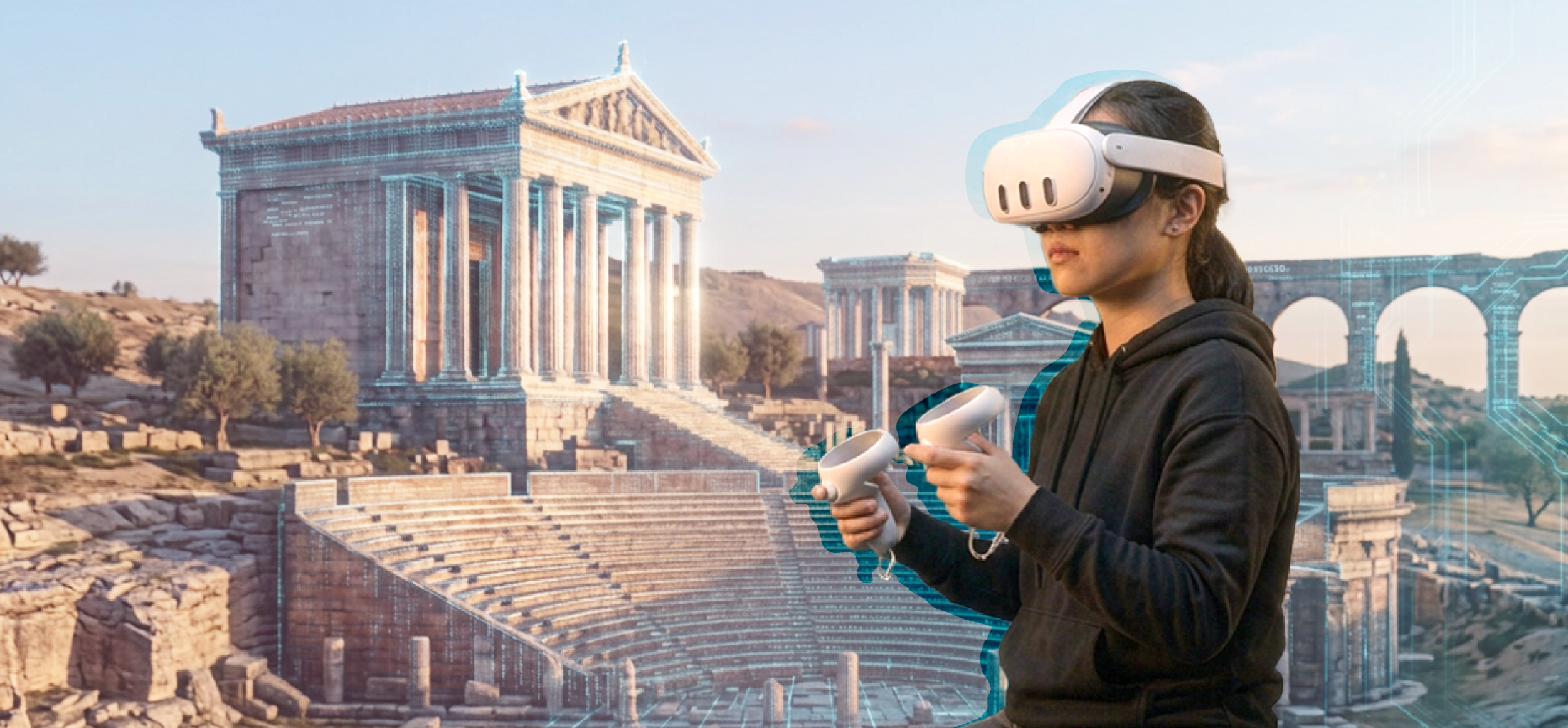
It offers universal and democratic access, breaking down geographical and physical barriers, and enabling anyone anywhere in the world to explore digitised historical monuments or museums with unprecedented multisensory realism. By working exclusively with certified digital assets, it combats misinformation and ensures that generative AI respects the authenticity and historical truth of the cultures represented; it also contributes to sustainability by enabling the monitoring of the state of conservation of real archaeological sites in the face of climate change or mass tourism, thereby protecting them for future generations.
References
- Naciones Unidas. (s.f.). Industria, Innovación e Infraestructura. Desarrollo Sostenible. https://www.un.org/sustainabledevelopment/es/infrastructure/
- United Nations. (n.d.). Industry, Innovation and Infrastructure. Sustainable Development. https://www.un.org/sustainabledevelopment/es/cities/
This activity contributes to the achievement of the following SDGs: